by: Chieloka Anadu
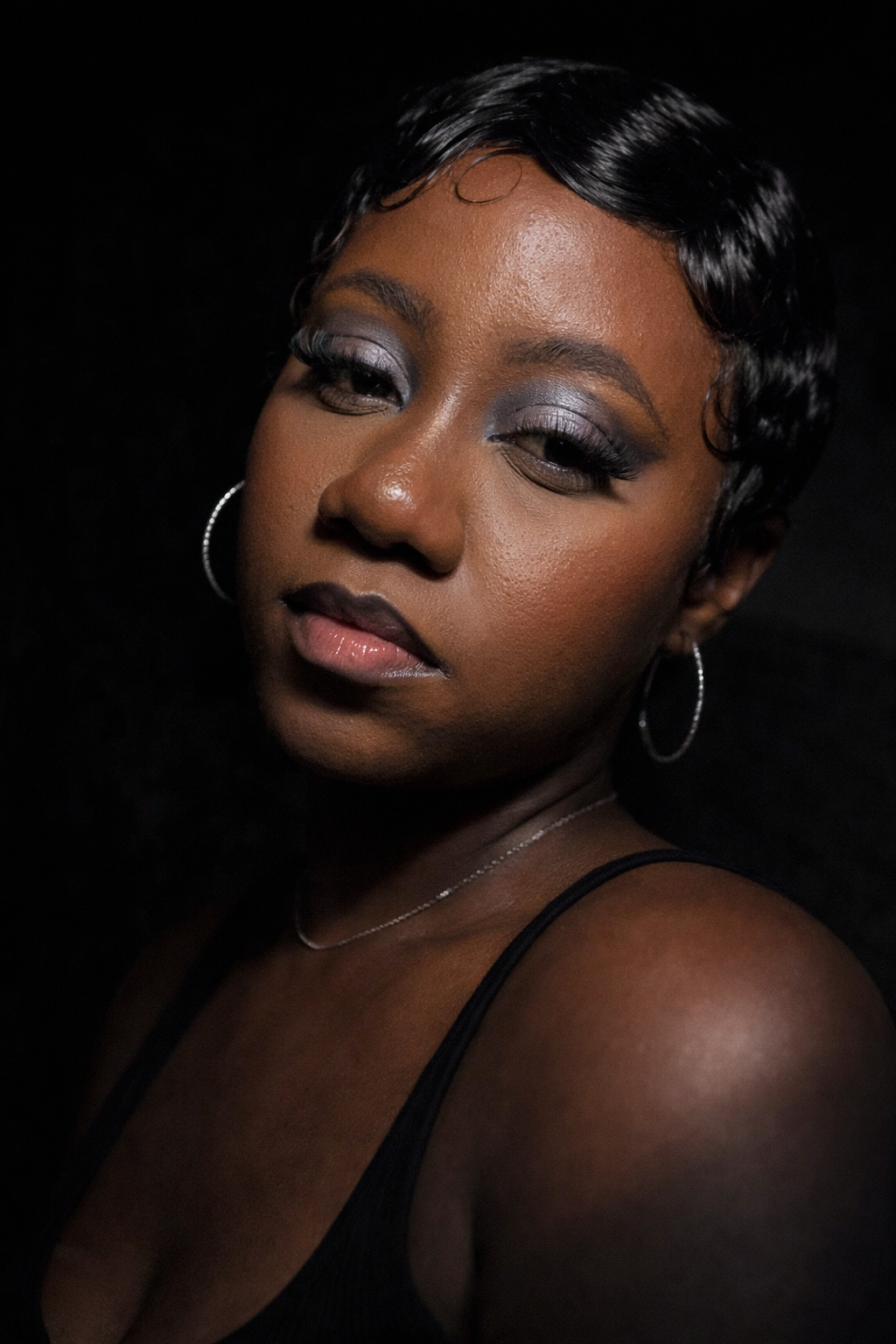
Imo Diamond Lawrine experienced a shift that turned a lifelong habit into a practice. Self-taught, she works mainly in charcoal and pastel, with most of her work centered on women and human experience: emotion, identity, vulnerability, resilience, and hope. Her images draw directly from lived experience – things she has felt, witnessed, and noticed in the people around her. An experience reshaped into something viewers can see themselves in.
That process of transformation starts long before she picks up a material. “Sometimes it’s my own experiences, sometimes it’s what people around me are going through, and sometimes it’s just something I see that stays in my mind,” she says of her inspiration. A feeling, a fragment of someone else’s story, a passing image, any of it can set off the same instinct: how can I transform this into an artwork? For Lawrine, inspiration is less about seeking out grand subjects than staying alert to ordinary life and the emotions people quietly carry.
She doesn’t point to a single artist as her defining influence. Instead, she describes an openness to whatever work challenges her to grow, wherever she finds it. One formative influence wasn’t even a professional artist at all – someone who, early in her development, took the time to share shading tips and guidance. That generosity, she says, shaped her as much as any established name has. Her sense of influence extends naturally to the people who have supported her throughout her journey, treating craft and community as inseparable.
Her materials are deliberately chosen to carry meaning, not just technique. Working mainly in charcoal and soft pastel on paper, Lawrine uses charcoal for the depth and emotional weight it can hold, reserving color for something more specific. “In many of my works, the charcoal represents a person’s present reality, while the colour represents hope, possibilities, growth or the future they are striving toward,” she explains. That contrast – between what is and what might still be – has become central to how she builds an image, turning a technical choice into the emotional architecture of the work itself.
Creative blocks, by her own account, are not something she has made peace with easily. She describes the particular frustration of having ideas without materials, and then, once the materials are in hand, struggling to settle on what to make. Rather than forcing her way through it, she has learned to let the process breathe. Even when she feels stuck, she trusts that her mind is still working – processing thoughts and experiences that may surface later as finished pieces. “Creativity comes in seasons,” she says, “and sometimes patience is part of the artistic journey.”
If her artwork could speak directly to a viewer, Lawrine believes it would offer a kind of reassurance: that what you’re going through right now does not have to be the end of your story. Her work holds pain and vulnerability alongside hope, insisting that the two are not contradictions but companions on the same path. At its core is a conviction that circumstances, however difficult, do not have to define who a person becomes.
That conviction is part of what makes her participation in the Anadu Art Fair feel significant. As a self-taught artist, exhibiting on a platform of this scale is, in her words, both exciting and encouraging. Personally, it stands as confirmation that the years spent developing her craft are beginning to open new doors. Professionally, it offers the chance to connect with collectors, fellow artists, curators, and a broader audience than she has reached before. She speaks of the opportunity with clear gratitude, and looks forward to taking part in the inaugural Anadu Art Fair as a new chapter in a journey that has been years in the making.
Follow Lawrine’s journey on instagram: diamondl__art
Blog
This section provides an overview of the blog, showcasing a variety of articles, insights, and resources to inform and inspire readers.
-
Fragments and Identity: The Practice of Flourish Oyinlola
By: Chieloka Anadu Flourish Oyinlola is a Nigerian contemporary visual artist based in Ibadan, working…
-
Beauty in the Discarded: The Fabric Collage Art of Theophilus Chinonso Agwunwa
By: Chieloka Anadu Theophilus Chinonso Agwunwa is a Nigerian fabric collage artist who graduated with…
-
Look a Little Closer: The Figurative Art of Martha Adanma Okechukwu
By: Chieloka Anadu Martha Adanma Okechukwu is a Nigerian visual artist based in Lagos whose…

Leave a Reply