By: Chieloka Anadu
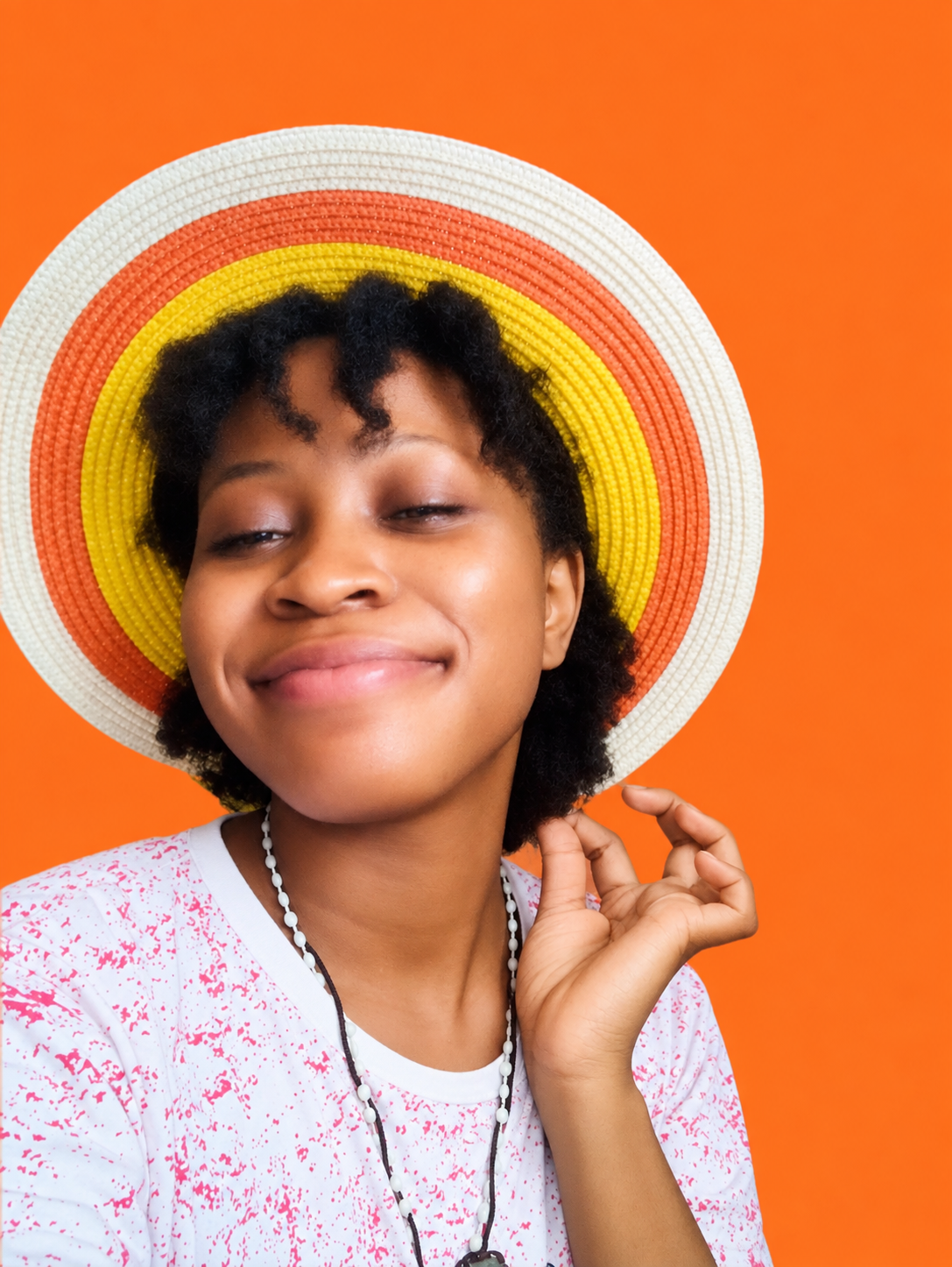
Izoduwa Ero, a Nigerian artist working under the creative name Ized Art, traces her relationship with art back to Kindergarten Three, when holding a pencil first let her turn an idea in her head into something visible on paper. That early curiosity never left her, even as her interests grew increasingly rooted in science. Over time, she came to see the two as less separate than they appeared, a realisation that led her to describe herself as a “creative scientist” and ultimately shaped her artistic philosophy, which she calls The Thinking Canvas – an approach that lets her explore thoughts, questions, observations, and ideas through visual expression. She began practising art professionally in 2018, but it was the COVID-19 lockdown that proved the real turning point: with more time to create and reflect, art became more than something she simply enjoyed. It became, in her words, a way to process the world and communicate the ideas occupying her mind, with every piece since serving as a chance to explore what she calls “a new fantastic point of view.”
Her inspiration begins, she says plainly, with faith. “Jesus is my greatest inspiration,” she explains, describing a belief that God placed in her both a natural curiosity and the ability to observe the world around her – along with the capacity to translate those observations into art. When ideas start coming together in her head, she says, “I just think, ‘Oh boy, I better get to work!’” Her scientific interests shape that process just as much, feeding a steady curiosity about how things work, why they happen, and how different ideas connect – observations that often reveal possibilities she wants to express visually. Her creative process, as she describes it, sits at the meeting point of faith, scientific curiosity, and everyday observation, with no fixed formula for what sparks the next idea.
Several artists have shaped her journey in personal, specific ways. Osaretin Igbinosa, known as Blast Art, served as a catalyst for Ero’s decision to pursue art professionally – seeing what Igbinosa achieved, she says, motivated her to “fan the artistic flame that was already in me.” Anedu Edozie’s portraits drew her in while she was developing her own drawing skills, and watching Edozie’s later shift into abstraction has stayed with her as a reminder that an artist can keep evolving. Working alongside Prosper Aluu pushed her further still, encouraging her to look inward and dig deeper into her own artistic identity rather than chase what is simply visually appealing. Kelvin Okafor, Brooke Cormier, and Arinze round out a wider circle of influence, each contributing something distinct to how she thinks about the work.
As a mixed media artist, Ero works mainly with acrylic, charcoal, and coloured pencils on paper, and has also used pastel chalks on straw board, though less often in recent years. She resists tying any single idea to one medium, since each material offers its own way of expressing what’s in her mind – charcoal for depth, contrast, and texture; coloured pencils for detail and subtlety; acrylic for colour, layering, and experimentation with texture. For Ero, these materials function as tools for translating what she sees, thinks, and imagines into something tangible, with the choice of medium following the idea rather than the other way around.
When inspiration runs dry, Ero has learned not to panic. She allows herself to rest, return to everyday tasks, and step back from creating, having found that forcing an idea rarely improves the result. She also draws energy from being around other artists who are fully immersed in their own work – their excitement, she says, often reminds her why she loves creating in the first place and pulls her back toward her materials.
Asked what her artwork would say if it could speak, Ero answers without hesitation: “Pause for a moment and observe the beauty of the world around you” – a line she also renders in Latin, “Pausa paulisper et pulchritudinem mundi circum te observa.” She believes there is more beauty in the world than people, caught up in busyness, tend to notice, and she wants her work to slow viewers down long enough to look closely and see something familiar in a new way.
Participating in the Anadu Art Fair feels, to Ero, like a long-awaited moment finally arriving at the right time. She has wanted to experience an art fair for years, watching opportunities pass at moments when she wasn’t ready, or arrive when the timing wasn’t right. Being here now, she says, lets her finally say, “Yes, this is the moment.” For Ized Art, the fair is more than participation – it’s a chance to step outside her usual space, reach a wider audience, and meet people who connect with the thinking behind her work. She’s especially drawn to the idea of someone standing in front of a piece, pausing, and discovering something of their own in it. Personally, she sees Anadu as an important step in her artistic journey; professionally, a chance for Ized Art to grow, reach new collectors, and open the door to new possibilities – and above all, a chance to finally put the work out into the world and let people experience it for themselves.
Follow Ero’s journey on Instagram: Ized_Art
Blog
This section provides an overview of the blog, showcasing a variety of articles, insights, and resources to inform and inspire readers.
-
Personal Totems: Wood, Metal, and the Presence of the Ancestors
By: Chieloka Anadu Long before he made sculptures, Monkorr Raymond Mgba was a child watching…
-
Feelings Words Can’t Capture: Ese’s Intuitive Abstractions
By: Chieloka Anadu Some feelings resist language, and Vincentia Esinam Anthony, known as Ese, paints…
-
Pause, Connect, Reflect: The Portraits of Okwufulueze
By: Chieloka Anadu What does it mean to grow up as a girl in a…

Leave a Reply