By: Chieloka Anadu
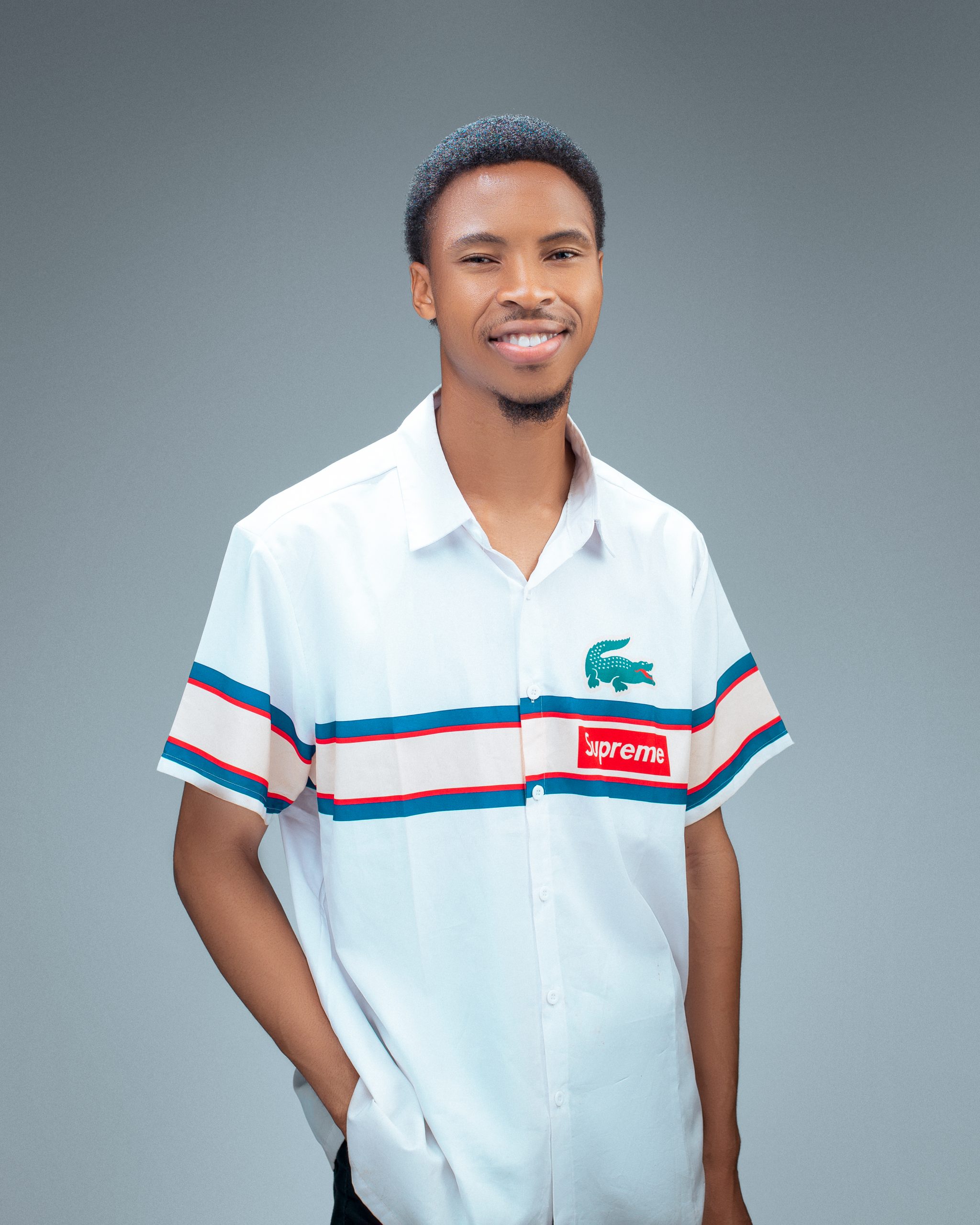
Joseph Egheosa Ifada is a self-taught Nigerian visual artist and a graduate of Theatre and Media Arts from Ambrose Alli University, whose practice centers largely on the human mind – self-reflection, self-awareness, and mental health. He is drawn to what people experience both internally and externally: “the things we don’t always say, the things society places on us, our relationships, our struggles, our hopes and the different ways we try to find peace in the middle of all of it.” Working primarily in pastel chalks on strawboard, alongside acrylic and other media, Ifada builds figurative, hyperrealistic work that leans on symbolism and occasional surreal elements to communicate ideas beyond what is immediately visible. Art, for him, functions as “a place of rest, innovation and contemplation” – one of the ways he understands both himself and the world around him.
His creative process draws from art, people, ideas, technology, and life itself, with no single trigger. Sometimes a person sparks an idea, sometimes an experience; other times a thought repeats in his mind until, somewhere in that repetition, an artwork begins to take shape. Occasionally he starts without any clear concept at all, simply allowing the work to flow. He thinks often about how people relate to one another, and how they’re shaped by family, work, religion, society, and their own minds. Music plays its own role in the process – solemn music when he needs a calm psychological space, louder sounds or rap when something more intense needs expressing. He doesn’t always set out to make something beautiful: “Sometimes I begin because there is something I am trying to understand.”
Among his influences, Ifada names Kelvin Okafor, Johannes Wessmark, and Arinze Stanley, each admired for something distinct. Okafor’s approach to portraiture – his attention to facial detail and the emotional presence of his subjects – resonates with Ifada’s own interest in people and expression. Wessmark’s treatment of water, light, and the human figure draws him in through the atmosphere and tranquility his hyperrealism creates. Stanley’s influence lies elsewhere, in his “extraordinary discipline, precision and dedication to the craft of drawing.” Ifada is careful to frame these as points of departure rather than templates: their work, he says, has shown him what’s possible with realism and pushed him to keep developing his own visual language, carrying his own experience, questions, and perspective.
Pastel chalk on strawboard remains his primary material, supplemented by acrylic and other media. Its significance lies in the intimacy it allows – building an image gradually, layer by layer, with close attention to detail, texture, light, and expression, giving him time to sit with his subject. He’s drawn to figurative, hyperrealistic representation because the human face and body can communicate so much without words, but technical accuracy is never the destination. He layers in symbolism, colour, and composition to carry a second level of meaning, aiming for something beyond admiration of skill: “I want someone to see the work and eventually move beyond, ‘This is well drawn,’ to ‘What is this saying to me?’”
When inspiration runs low, Ifada resists treating it as a problem to be forced away. He allows himself to stop, viewing art as a place of rest rather than a constant obligation to produce. He’ll step back, observe, listen to music, think, live, or simply let his mind wander – and because so much of his work comes from contemplation, he keeps processing even when he isn’t physically creating. Eventually something catches his attention – a person, a thought, an experience, a conversation – and the process starts again.
Asked what his artwork would say if it could speak, Ifada answers: “Look again. Don’t just look at me. Look within yourself.” Much of his work sets problems against what he calls his “preferred lenses on the solutions” – trauma, mental struggle, social pressure, and confinement held alongside peace, acceptance, hope, connection, and the possibility of healing. He isn’t interested in dictating exactly what a viewer should see; he wants the work to open a conversation, with the viewer’s own interpretation becoming part of it. As he puts it, “art is real life through my brushes, through my lenses.”
Participating in the Anadu Art Fair carries real meaning for Ifada, offering a chance to bring his thoughts, experiences, and visual language into a larger conversation. The fair’s theme, “Homecoming: Convergence,” resonates directly with what he has long been exploring – family, belonging, connection, memory, identity, and the different meanings people attach to the idea of home. Personally, he sees it as another step in understanding himself and sharing that understanding through art; professionally, a chance to place his work alongside other artists, meet new people, and let the work exist beyond the walls of his studio. For Ifada, it amounts to more than simply exhibiting paintings – it’s an opportunity to connect, to communicate, and to keep growing as an artist.
Follow Ifada’s Journey on Instagram: joes__art
Blog
This section provides an overview of the blog, showcasing a variety of articles, insights, and resources to inform and inspire readers.
-
Personal Totems: Wood, Metal, and the Presence of the Ancestors
By: Chieloka Anadu Long before he made sculptures, Monkorr Raymond Mgba was a child watching…
-
Feelings Words Can’t Capture: Ese’s Intuitive Abstractions
By: Chieloka Anadu Some feelings resist language, and Vincentia Esinam Anthony, known as Ese, paints…
-

Pause, Connect, Reflect: The Portraits of Okwufulueze
By: Chieloka Anadu What does it mean to grow up as a girl in a…

Leave a Reply