By: Chieloka Anadu
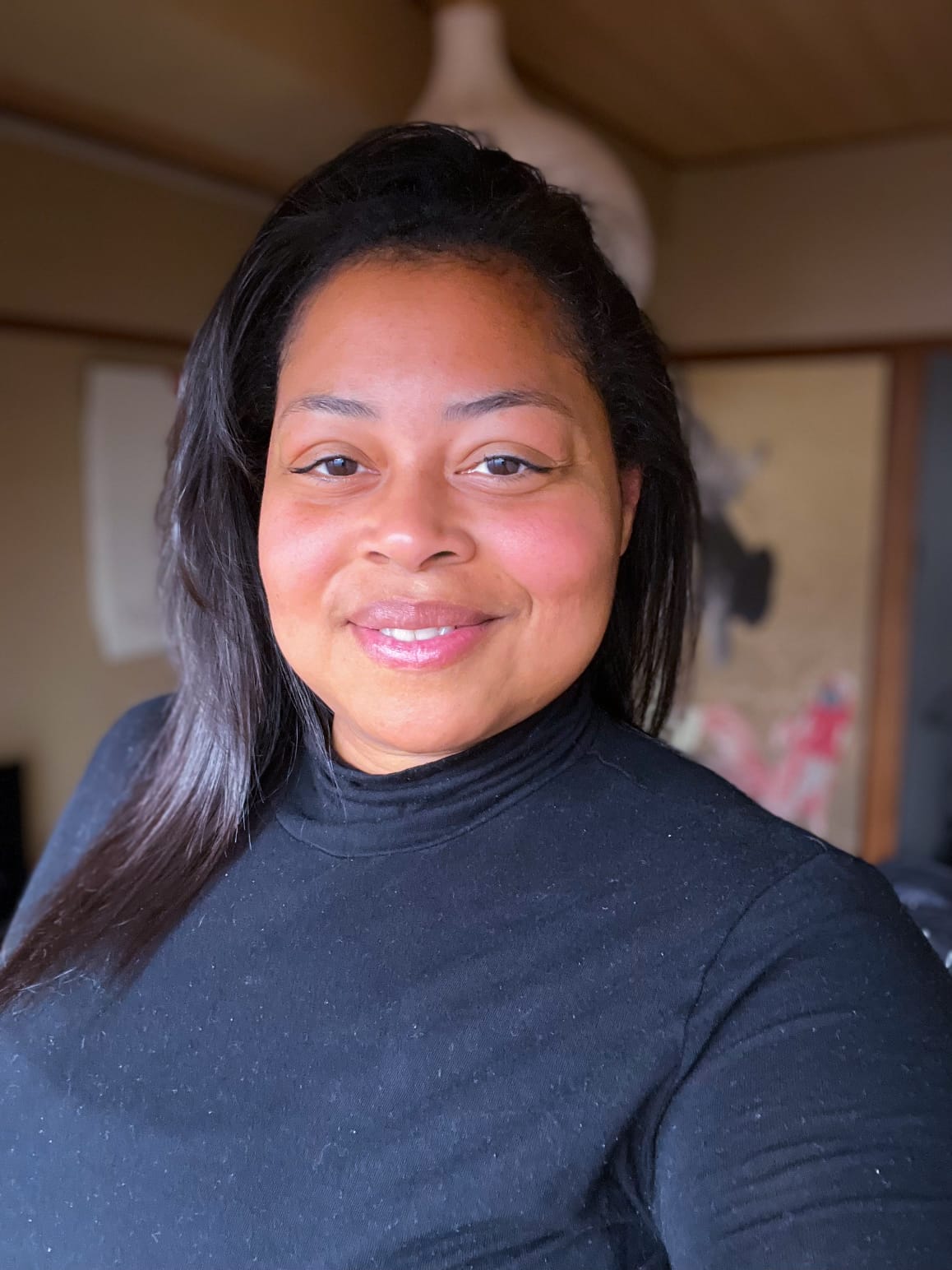
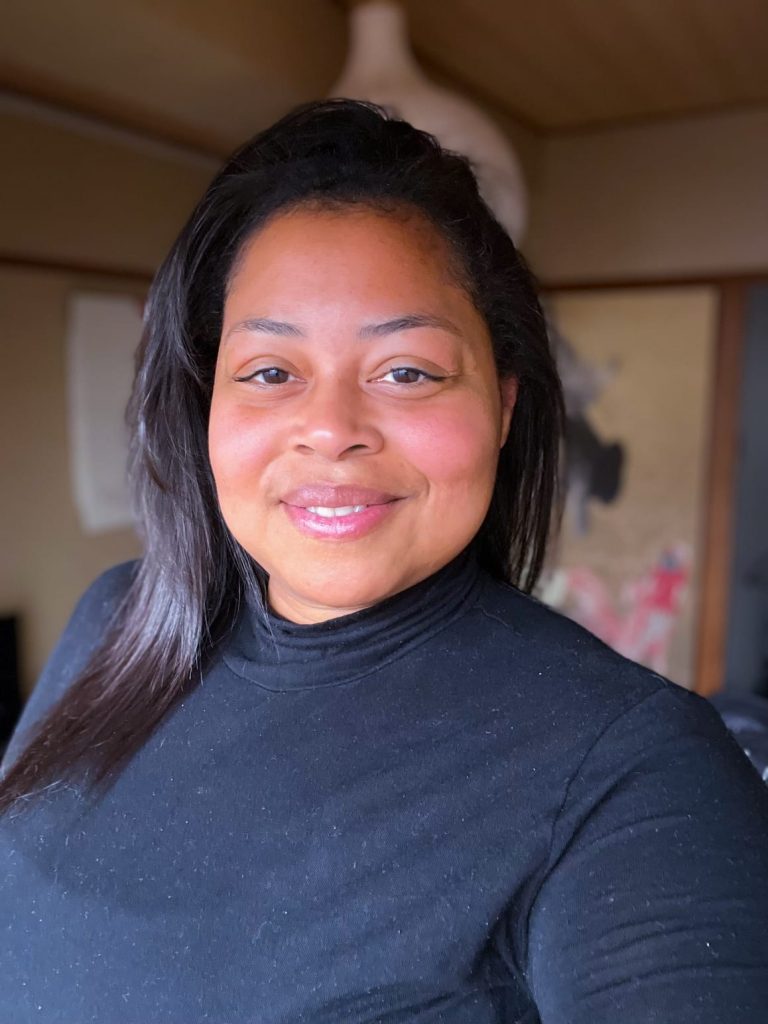
In the quiet, historic corners of Bath, England, Ani Lacy is engaged in a profound act of excavation. An American artist and art historian, Ani retrieves histories. Her practice is a sophisticated tapestry of ceramics, digital collage, and archival imagery, all held together by a single, driving question: How do we carry the stories of those who were never allowed to speak?
Ani’s work is inseparable from her biography. Having grown up in foster homes and orphanages, she understood the weight of “missing pieces” long before she began her PhD. This early experience of displacement became the bedrock of her fascination with migration. “My creative process is deeply shaped by my upbringing,” she explains. It was only as an adult that Ani reconnected with her biological family, discovering an archive that stretched back two hundred years to the era of enslavement in the United States. For Ani, these documents weren’t just paper; they were a “rupture” being healed. By layering these family images with photographs of her own travels – visiting lands her ancestors were legally forbidden to enter – she collapses time. She views history not as a straight line, but as a cycle where the past constantly surfaces in the present.
While her research focuses on the “Black Atlantic” ceramic traditions, her studio work is where that research becomes physical. For the last five years, Ani has dedicated herself to ancestral clay techniques, specifically working with wild clay. “Clay is central to my practice because of its direct relationship to place and to time,” she notes. Under the tutelage of Armenian artist Corinne Aivazian at Casa Julfa in France, Ani learned the art of “slowness.” Working with earth directly from the land is an act of care – a way to ground a life that began in the instability of the foster system. Alongside the heavy physical nature of clay, she uses asemic writing – a form of script that has no fixed semantic meaning. She describes it as a “portable way of communicating” that moves beyond the limitations of language, allowing her to speak to ancestors and descendants alike.
When asked about her influences, Ani points away from the famous names often found in textbooks. Instead, she looks to the colonoware artisans—the enslaved makers whose names were never recorded but whose fingerprints remain in the archive of the earth. “Their work survives through small gestures,” she says. This lineage is her ethical compass. While she deeply respects contemporary figures like Theaster Gates whose Afro Mingei series mirrors her own interest in the intersection of Black and Japanese folk traditions, and Jacqueline Bishop, her primary allegiance is to the “anonymous and vernacular makers.” For Ani, art is less about a signature and more about “inheritance and repair.”
If you were to step into the world of Ani’s art, you wouldn’t find a battlefield or a lecture hall. Instead, you would find a home. Despite the grand themes of migration and PhD-level research, Ani identifies a “quiet center” at the heart of her work. “When I step back… what I see is an intimate domestic space at the center,” she observes. “Family, care, and the domestic sphere in constant movement are the core.” Even her creative blocks are handled with this domestic patience; she refuses to force the process, trusting that creativity, like the seasons in her garden, will return in its own time.
Participating in the Blossom exhibition at Anadu Art Gallery is, for Ani, a remedy for the “solitary nature of making.” While the exhibition provides a professional stage for her work to be seen, its true value is the sense of shared attention.
For an artist whose life began in fragmentation, Blossom represents a moment of integration. It places her work in a living dialogue with other artists, moving her practice from the private archive into a public community. In this space, the “silenced histories” she works so hard to surface are finally given room to breathe, grow, and BLOSSOM.
Follow Ani’s Journey on Instagram: @anilacyceramics
Leave a Reply