By: Chieloka Anadu
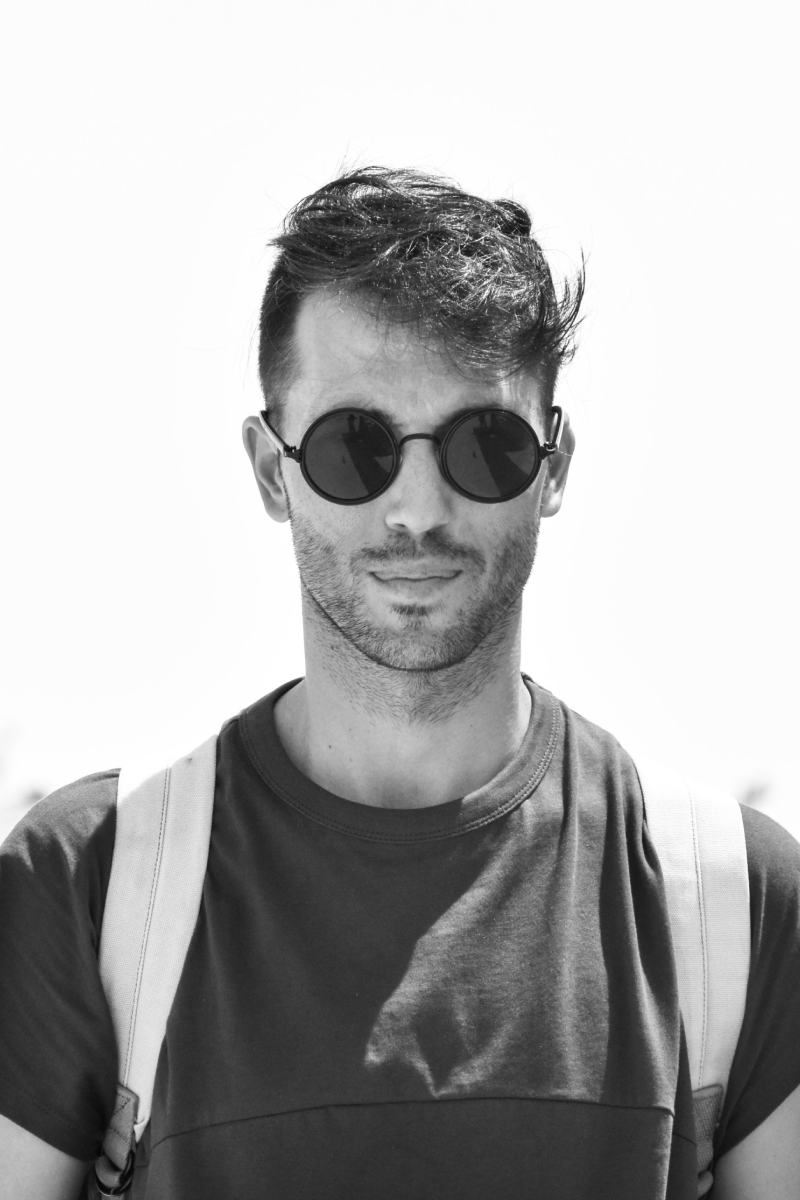
For Robin Kane, the camera is not a tool for “capturing” a moment, but a tool for constructing a site. A multidisciplinary visual artist specialising in conceptual photography, Robin treats the human body as an archive, a place where identity is not a fixed point, but a continuous negotiation.
In Robin’s work, there are no easy resolutions. Instead, there is a profound, quiet tension: a tug-of-war between presence and absence, the seen and the hidden, the surface and the weight beneath.
Robin’s practice is grounded in the belief that the body learns to hold history long before the mind can put it into words. Through fine-tuned gestures and precise material arrangements, Robin explores “quiet structures of inheritance.” These are the postures we adopt to protect ourselves and the ways we carry memory in our limbs.
“Restraint is central,” Robin notes. By working with a limited palette and controlled lighting, Robin ensures that every image sustains a psychological pressure. The goal isn’t to perform vulnerability for the viewer, but to embed it so deeply within the image that it emerges only through a slow, deliberate gaze.
Robin’s creative process is a reflection of a life lived “between” – between cultures, places, and versions of the self. Growing up, Robin developed a keen awareness of visibility and safety due to cultural background. This history taught Robin how to navigate the delicate dance of when to expand and when to shrink, when to stand out and when to disappear.
This continual reconstruction of the self has evolved into a form of emotional literacy. Because Robin has never occupied a fixed cultural center, identity in their work is fluid and unanchored. The figures in these photographs exist in states of “becoming,” hovering in the precarious space between protection and exposure. It is a visual language born from the quiet courage required to stand outside of expectation.
Robin finds kinship in artists who treat the body as a structural and psychological site. The formative works of Francesca Woodman and Ana Mendieta – artists who mastered the use of imprints and disappearances – echo through Robin’s compositions.
There is also a clear influence from Berlinde De Bruyckere’s sculptural explorations of endurance, and the abstracted emotional tensions found in the photography of Viviane Sassen. Like these predecessors, Robin uses gesture to carry weight without needing to provide a definitive narrative resolution.
Robin’s technique is one of meticulous construction. Each work is built through iterative staging, adjustment, and refinement. By stripping away the “noise” of busy environments, Robin allows the body to function structurally. The image becomes a vessel for memory rather than a literal story.
When creative blocks arise, Robin views them not as obstacles, but as signals to decelerate. “Staying with confusion or not-knowing is part of the process,” Robin explains. By refusing to force a “surface-level” result, Robin allows the work to remain honest, even in its imperfections.
If Robin’s artwork could speak, it would not offer answers. Instead, it would ask the viewer to stay with their own feelings rather than rushing to interpret what they see.
“Art should comfort the disturbed and disturb the comfortable.”
Robin is not interested in being the “key” to understanding the work. Instead, the work is a mirror. Whatever a viewer recognises or projects onto the image – their own memories, their own fears of abandonment, their own longings is entirely valid. For Robin, the interpretation is where the work becomes personal.
Participating in Blossom: Chronicles of Emergence holds a specific weight for Robin. In this context, “blossoming” is not a decorative act; it is a process of uncertainty and quiet transformation. It is the act of allowing meaning to surface gradually before it stabilises.
Professionally, the exhibition offers a chance to break the isolation of the studio. By placing their practice in conversation with other artists, Robin transforms a singular statement into a shared field of inquiry, reminding us that the act of becoming is something we all navigate, one quiet gesture at a time.
Follow Robin’s Journey on
Instagram: @ctlr_faces, @tut_____t,
Leave a Reply