By: Chieloka Anadu
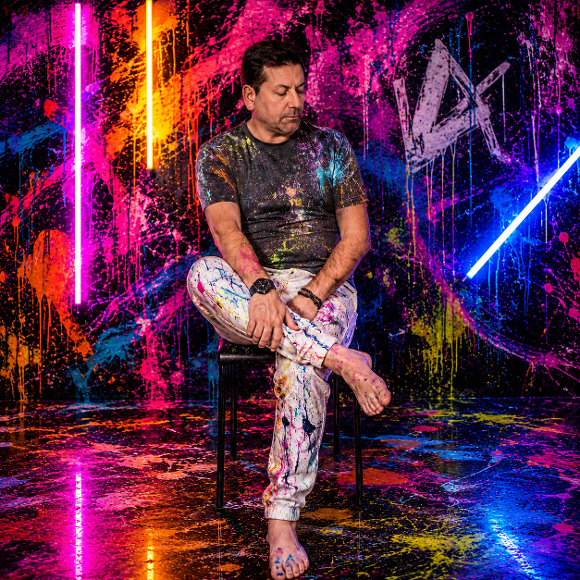
Johnny Rao’s practice draws on what he experiences, observes, and hears: “stories, emotions, human experiences, beauty, pain, joy, and difficult moments,” all of which he works to transform into a personal visual language. Calmness, reflection, and meditation sit alongside that transformation as essential parts of his creative process, shaping not just what he makes but how he arrives at it.
That process, he says, is inspired by “what I listen to, what I feel, what I observe, and what I experience.” He doesn’t always speak directly about his own life – much of his inspiration comes from other people’s stories, events, and emotions, and from the wide range of experience that belongs to humanity more broadly. Rao describes the process as largely instinctive: when he finds the right moment to create, he allows feelings and ideas to develop freely, rather than forcing them into a predetermined shape.
He resists naming any single artist as a defining reference point. “I do not have one specific artist as my main reference,” he says, though he admires and respects many, spanning past and present, famous and lesser known. What he avoids is following one particular model. Instead, his strongest inspiration comes “from life itself, from people, experiences, and what happens around me” – a deliberate choice aimed at maintaining what he calls “a personal and independent artistic language.”
Materially, Rao’s practice is wide-ranging by design. He works across painting, mixed media, recycled materials, digital art, video art, and conceptual approaches, drawn especially to materials that already carry a history or a connection to the real world. Sometimes that means gathering materials directly from the places he visits – in Brazil, for instance, he collected soil and incorporated it into a painting. “For me, materials can become memories, experiences, and traces of life,” he explains, treating raw matter as something closer to documentation than mere medium.
Creative blocks are, by his own account, rare. “Fortunately, I rarely experience real creative blocks,” he says. When he feels the need to slow down, he seeks out silence, listening and observing rather than pushing through. His mind, he notes, stays full of ideas, energy, and a desire to express himself, and working across different artistic languages – painting, digital art, video art, conceptual work – gives him the freedom to change direction whenever he needs to, keeping his creativity alive without forcing it.
Asked what his artwork would say if it could speak, Rao returns to a single idea: that the viewer should not feel alone. Even when a piece confronts pain, sadness, reality, misunderstanding, or indifference, he wants it to hold onto the possibility of constructive energy – “like an embrace or a hand on the shoulder.” Art, in his view, can speak honestly about the hardest parts of life while still leaving room for reflection, strength, and the possibility of moving forward.
For Rao, participating in the Anadu Art Fair is above all a chance to share and communicate his art with a wider audience. Selling work is always appreciated, he notes, but for him the experience, the new encounters, and the new collaborations matter just as much. Every exhibition, he says, gives art the chance to travel and reach different people – and he holds onto a broader belief that artists, however small they may be within such a vast world, can still offer “a small drop of sensitivity, purity, and well-being.”
Follow Rao,s story on Instagram: @rao_johnny_art
Blog
This section provides an overview of the blog, showcasing a variety of articles, insights, and resources to inform and inspire readers.
-
Fragments and Identity: The Practice of Flourish Oyinlola
By: Chieloka Anadu Flourish Oyinlola is a Nigerian contemporary visual artist based in Ibadan, working…
-
Beauty in the Discarded: The Fabric Collage Art of Theophilus Chinonso Agwunwa
By: Chieloka Anadu Theophilus Chinonso Agwunwa is a Nigerian fabric collage artist who graduated with…
-
Look a Little Closer: The Figurative Art of Martha Adanma Okechukwu
By: Chieloka Anadu Martha Adanma Okechukwu is a Nigerian visual artist based in Lagos whose…

Leave a Reply