By: Chieloka Anadu
Chimdindu Madubuike, a young Nigerian artist, sees the act of creation as a journey inward. Working primarily through the tactile mediums of painting and drawing, Chimdindu navigates the delicate convergence of identity, memory, and the personal experiences that shape a life.
His practice is characterised by a deep sense of introspection, using figurative and observational imagery to capture those fleeting, quiet moments where we truly begin to understand ourselves.
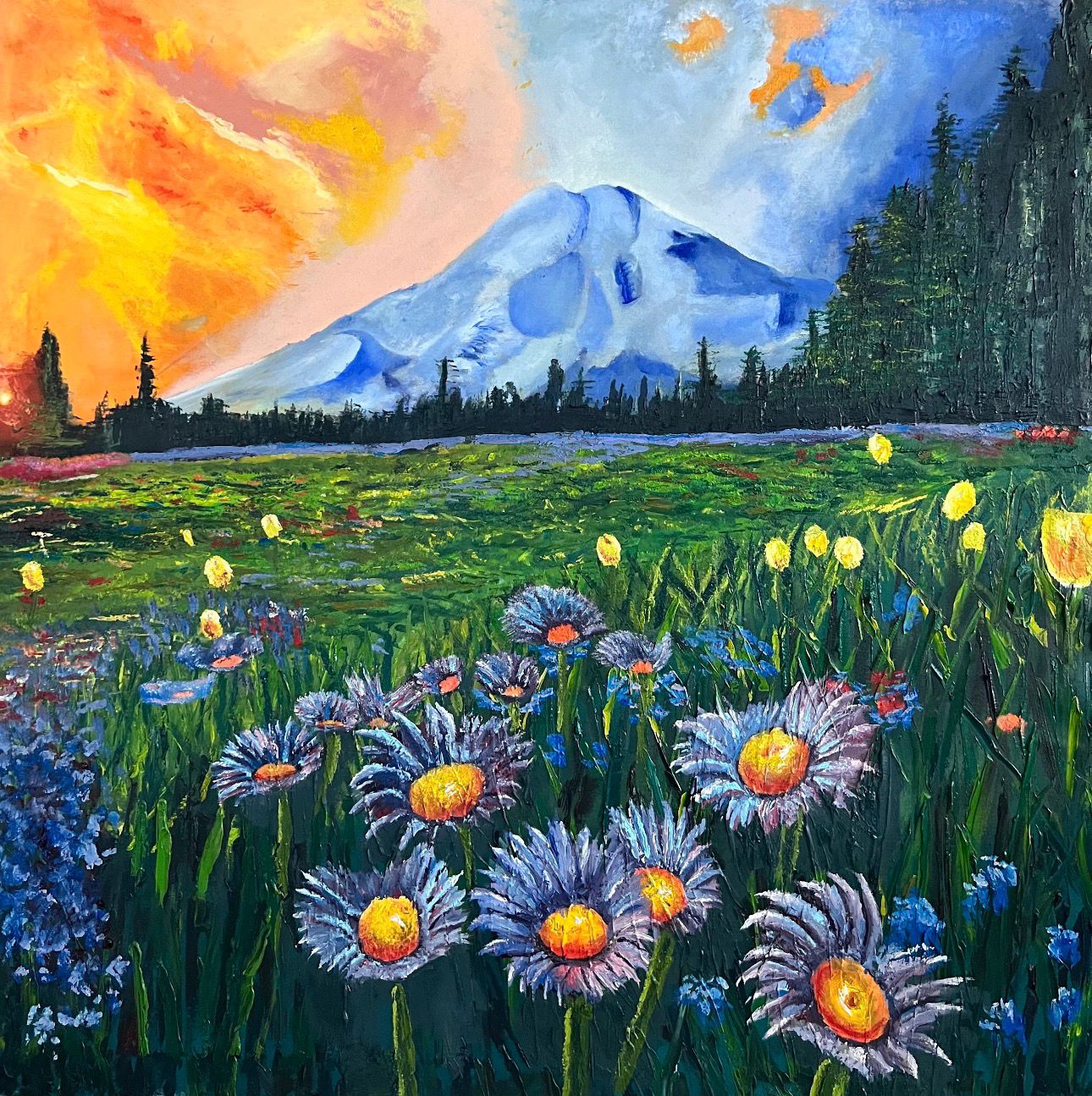
Chimdindu’s technical choices are a direct reflection of his philosophy. He works mainly with Gouache and Charcoal, materials that allow for a unique interplay of opacity and raw, gestural energy.
He places immense value on layering and visible marks within his work. For Chimdindu, these are not just aesthetic choices; they are metaphors for the human experience. The layers represent the accumulation of time and memory, while the visible strokes reflect the “process of becoming”, a visual record of growth and change that mirrors the artist’s own evolution.
Chimdindu’s creative DNA is a bridge between the classical European tradition and the vibrant history of African modernism. He finds deep inspiration in the atmospheric landscapes of John Constable and J.M.W. Turner, particularly their ability to imbue nature with profound emotion.
Simultaneously, he looks to the legendary Ben Enwonwu, whose work pioneered a new visual language for Nigerian identity. From these masters, Chimdindu has learned to approach his own work with a blend of rigorous technical skill and an unwavering commitment to emotional honesty.
The “everyday” is Chimdindu’s greatest muse. His Nigerian background, the rhythms of nature, and the simplicity of daily life provide the foundation for his imagery. He is particularly drawn to quiet spaces, the kind of environments that allow personal memories to surface and guide the mood of a piece.
When the flow of ideas halts, Chimdindu treats the “block” with the same gentleness he brings to his canvas. He doesn’t force production; instead, he steps back to observe and rest. By revisiting old work and allowing himself time to reflect, he finds that his ideas return naturally, much like the seasons he often observes.
If Chimdindu’s artwork had a voice, it would not be a shout, but a soft invitation. It would ask the viewer to stop, breathe, and turn their gaze inward.
The work serves as a mirror, encouraging onlookers to reflect on their own identities and the experiences that have layered together to make them who they are. It is art that seeks to create a silent, shared space of self-understanding.
Participating in the Blossom exhibition is a significant milestone for Chimdindu, symbolising both personal and professional “emergence.” To him, Blossom is more than just a gallery showing; it is a manifestation of growth and a testament to the power of community.
By sharing his work alongside his peers, Chimdindu moves from the solitary space of reflection into a collective conversation, proving that while our identities are deeply personal, the process of becoming is something we all share.
Follow Chimdindu’s Journey on Instagram: @emc.madu
Leave a Reply