By: Chieloka Anadu
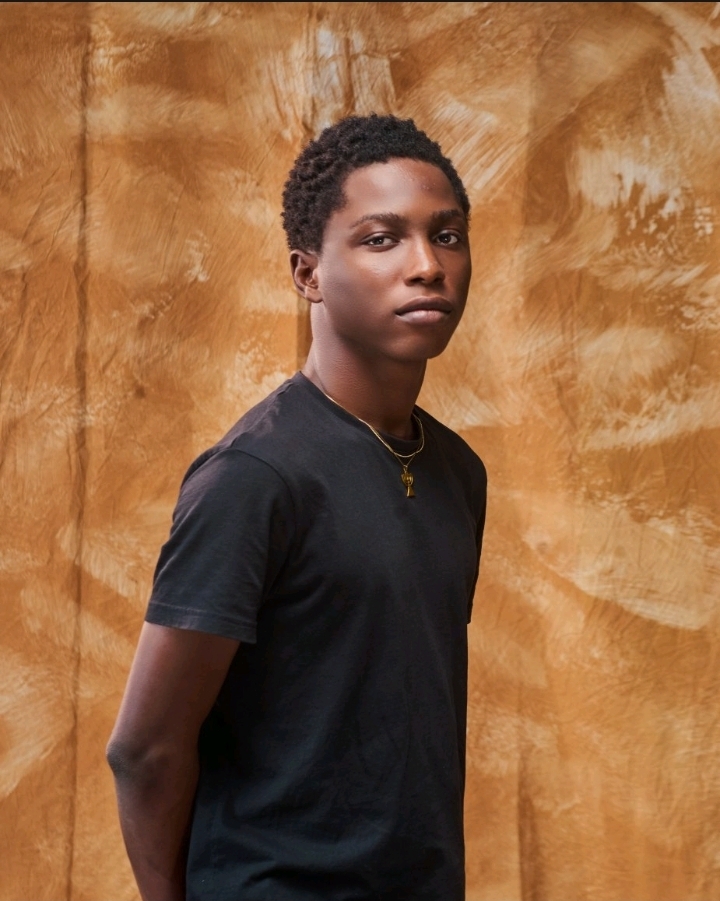
Olayori Daniel describes himself as a maximalist, and the word fits. Known as Dan Light, he is drawn to “layers, details, symbols, and visual worlds that give the viewer something to keep discovering.” He is a visual artist, storyteller, writer, and creative strategist whose practice uses visual storytelling to explore human experience, particularly oppression, identity, memory, society, faith, and the things we often overlook in everyday life. His work moves across digital art, graphic design, mixed visual experimentation, writing, and documentary-inspired research, and it is guided by a clear ambition: “I’m interested in creating work that does more than look good. I want the work to carry a story, raise a question, preserve a memory, or make someone feel something.”
Much of his inspiration comes from life itself: conversations, personal experiences, history, culture, events around him, and even small things people might normally ignore. He is especially drawn to the stories of people and societies, particularly those surrounding oppression, struggle, memory, identity, and survival. An idea often begins with a feeling or a question rather than a visual. He might see, read, or hear something, or live through something, and begin wondering, “What does this really mean?” From there, he builds the visual around the story. That is why research is so central to his process. “I don’t just want to create an image,” he says. “I want to understand what I’m talking about.”
Among the artists who have influenced him, Daniel names James Adebayo, Olaolu Slawn, and Mr Phispha. What draws him to them is a strong visual language and the ability to communicate ideas without explaining everything directly. His influences also extend beyond individual artists: photography, African visual culture, historical documentation, graphic design, contemporary culture, and storytelling have all shaped how he thinks about making art. He is interested in how different visual languages can come together to tell a single story.
A lot of his work starts digitally, using digital illustration, photo manipulation, compositing, graphic design, typography, and other digital techniques to build his pieces. But he isn’t attached to any medium for its own sake: “I choose whatever allows the story to be communicated properly.” He also enjoys experimenting with physical materials and translating digital ideas into physical objects, since there is something different about being able to touch and experience a work in person. “For me, the technique is secondary to the idea,” he explains. “The medium is a tool for telling the story.”
When creative blocks arrive, he has learned not to force himself to create. Sometimes the most productive thing is to step away: to consume, research, read, observe, listen to people, and simply live. “Creativity needs room to breathe,” he says. When he is stuck, he tries to understand why before trying to produce anything, since sometimes he has too many ideas and needs structure, and sometimes he simply needs rest. He has also come to understand that not creating for a while doesn’t mean he has stopped being creative: “Sometimes I’m still gathering material for the next thing.”
If his artwork could speak, he believes it would say: “Look again.” He wants his work to make people pause, not to hand them one fixed interpretation but to help them notice something they might have missed. His work often deals with things that are uncomfortable, forgotten, ignored, or hidden beneath the surface, so he wants viewers to engage with it rather than simply consume it. It might make them question something, remind them of something, or tell them a story they didn’t know they needed to hear. “I just want the work to leave something behind after you’ve looked away,” he says.
For Daniel, participating in the Anadu Art Fair is a form of validation. As a relatively new artist, being part of the fair feels like confirmation, in his words, “that I can tell stories on a much larger scale.”
Blog
This section provides an overview of the blog, showcasing a variety of articles, insights, and resources to inform and inspire readers.
-
The Medium is a Tool: Olayori Daniel on Storytelling
By: Chieloka Anadu Olayori Daniel describes himself as a maximalist, and the word fits. Known…
-
The Red That Runs Through It: Kareem Joseph Ayomide on Pain, Struggle, and Sacrifice in Red
By: Chieloka Anadu Running through nearly every painting by Kareem Joseph Ayomide is a streak…
-

When the Familiar Turns Strange: Caroline Braga
By: Chieloka Anadu An image can seem familiar, a body, a dream, a memory, and…

Leave a Reply