By: Chieloka Anadu
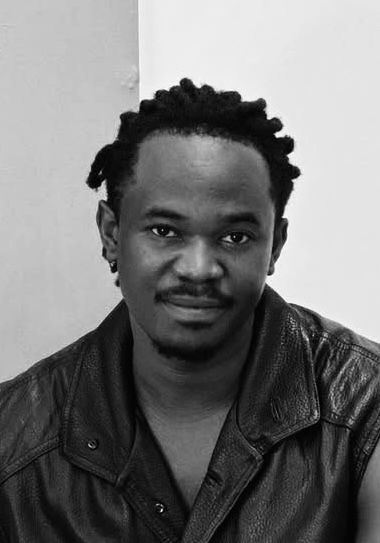
Emmanuel Ngunga is a Congolese painter from Kinshasa, Democratic Republic of Congo, now based in Cape Town, South Africa, where he continues a practice that began with training at the Académie des Beaux-Arts de Kinshasa. His work is rooted primarily in realism and hyperrealism, built mainly with acrylic on canvas, and centers on identity, memory, cultural heritage, childhood, inheritance, and transformation. He is especially drawn to how identity takes shape through what we inherit – from family, culture, and society – alongside what we come to know through our own individual experience.
His process draws on personal experience, cultural memory, and close observation of everyday life. The move from Kinshasa to Cape Town has shaped that thinking directly, sharpening the way he considers belonging, memory, and cultural heritage from the vantage point of two different cities and histories. Childhood holds particular weight in his practice. He describes it as “a fragile period of transition between who we are and what society begins to expect from us,” and much of his work returns to the things we inherit before we’re old enough to choose them – the quiet, early influences that continue shaping who we become.
Ngunga’s influences are less about individual names than a shared set of concerns: artists who have explored identity, the human figure, realism, and cultural representation across different generations and backgrounds. He’s quick to note that his own environment and cultural experience carry just as much weight as any outside reference, and he’s particularly drawn to artists who use the human figure to communicate ideas and emotion that extend beyond what is immediately visible on the surface.
Materially, he works mainly in acrylic on canvas, relying on realism and hyperrealism to allow close attention to the human face, skin, texture, and small detail. That precision, he’s careful to note, isn’t only about visual accuracy. “This precision is not only about making an image look realistic,” he explains. “It helps me give importance to the person represented and to the symbols and details within the work.” Cultural patterns, textiles, objects, and other visual elements are woven in alongside the figure, connecting it directly to questions of heritage and identity.
When a creative block sets in, Ngunga steps away from the work rather than pushing through it, giving himself time to observe and think – looking at references, photographs, cultural elements, or simply watching what’s happening around him. He lets ideas develop on their own terms instead of forcing them, trusting that a break often brings him back to the work with a fresh perspective.
Asked what his artwork would say if it could speak, Ngunga describes it as a kind of invitation: to look beyond the surface and consider one’s own identity, memory, and inheritance. His paintings tend to ask questions rather than offer answers – “What do we inherit before we can choose for ourselves? How much of who we become comes from our environment, our culture, and our history? And at what point do we begin to define ourselves?” He wants viewers to bring their own experience into the work and find something personal within it.
Participating in the Anadu Art Fair marks a significant step for Ngunga as an emerging artist, giving him the chance to present his work in an international context and connect with a broader audience. Personally, it carries weight as part of the artistic journey he’s been building from Kinshasa to Cape Town, an opportunity to share his perspective and grow his practice beyond his immediate surroundings. Professionally, he sees it as a chance to learn, meet other artists and art professionals, and continue developing both his practice and his presence within the wider art world.
Follow Ngunga’s journey on Instagram: emmanuel_ngunga_
Blog
This section provides an overview of the blog, showcasing a variety of articles, insights, and resources to inform and inspire readers.
-

Take Your Time: Oluwadamilola Oni on Colour, Nature, and Perspective
By: Chieloka Anadu Before Oluwadamilola Oni lays down a single block of colour, there is…
-
Scribbled, Layered, Torn: The Collage Practice of Jihène Bouden
By: Chieloka Anadu A scrap of paper, a stray mark, a gesture made without a…
-
Roots That Hold: The Black-and-White World of Mpilwenhle Gwala
By: Chieloka Anadu In Mpilwenhle Gwala’s work, black and white are never just colours. They…

Leave a Reply