By: Chieloka Anadu
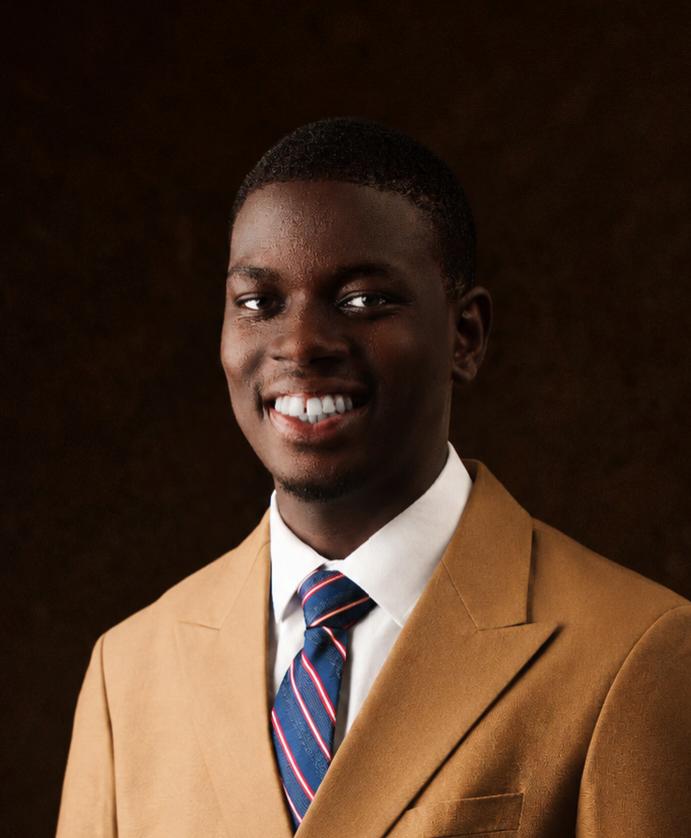
Praise Agunbiade, also known as MasterArt, is a Nigerian visual artist working mainly in mixed media, with a strong focus on denim and jean materials on canvas. His practice explores human experience, emotion, identity, pain, memory, and “the stories people carry silently.” By working with familiar materials like discarded jeans, he connects everyday life to deeper human experience, treating art as “a way of giving form to emotions and experiences that are often difficult to express with words.”
That interest begins with people, and specifically with what lies beneath appearances. “I am inspired by people and the experiences hidden behind their appearances,” he says, paying close attention to emotions, struggles, relationships, memories, and the things people often keep to themselves. His environment and African experiences shape his work as well, and a piece can begin almost anywhere: an ordinary moment, a conversation, a personal experience, or something he notices in another person. Underlying it all is a question he returns to again and again: “What is this person carrying that we cannot see?”
Among his influences, Agunbiade names Pablo Picasso, admired for his approach to breaking traditional forms, and looks closely at African artists who use their work to address identity, society, culture, and human experience. Those artists, he says, remind him “that an artist does not have to simply create something beautiful. The work should also have something meaningful to say.”
His choice of material carries that same conviction. Agunbiade works in mixed media, especially denim and jean materials, alongside drawing, painting, cutting, layering, and assembling on canvas. Denim matters because it is an everyday material with a history of its own: “People wear jeans through different moments of their lives, so the material already carries ideas of time, memory, labour, identity, and experience.” When he cuts and arranges it into an artwork, he is transforming something familiar into what he calls “a visual language for human stories.”
When creative blocks arrive, he gives himself time to observe rather than forcing the work. He looks at people, revisits old ideas, studies other artists, sketches, experiments with materials, and sometimes steps away from the studio altogether. He has learned that inspiration doesn’t always arrive fully formed: “Sometimes I begin with a feeling, a material, or a small sketch and allow the work to develop from there.”
If his artwork could speak, Agunbiade believes it would say: “Look beyond what you see.” Every person carries experiences, memories, wounds, dreams, and struggles that may never surface, and he wants his work to make people pause and connect with something within themselves. His measure of success is personal and direct: “If someone stands before my work and remembers something they have felt, survived, lost, or carried, then the work has spoken.”
For Agunbiade, participating in the Anadu Art Fair is “an important step in my growth as an artist.” Personally, it lets him share part of his journey and the stories behind his work with a wider audience. Professionally, it connects him with collectors, artists, curators, designers, and others interested in contemporary African art – an opportunity, as he sees it, to grow his practice, build meaningful relationships, and contribute his own voice to the Nigerian art scene.
Follow Agunbiade’s journey on Instagram: @masterart_denim
Blog
This section provides an overview of the blog, showcasing a variety of articles, insights, and resources to inform and inspire readers.
-
Scribbled, Layered, Torn: The Collage Practice of Jihène Bouden
By: Chieloka Anadu A scrap of paper, a stray mark, a gesture made without a…
-
Roots That Hold: The Black-and-White World of Mpilwenhle Gwala
By: Chieloka Anadu In Mpilwenhle Gwala’s work, black and white are never just colours. They…
-
Where the Painting Leads: The Intuitive Art of Goldie
By: Chieloka Anadu Goldie rarely knows how a painting will end when she begins it,…

Leave a Reply